

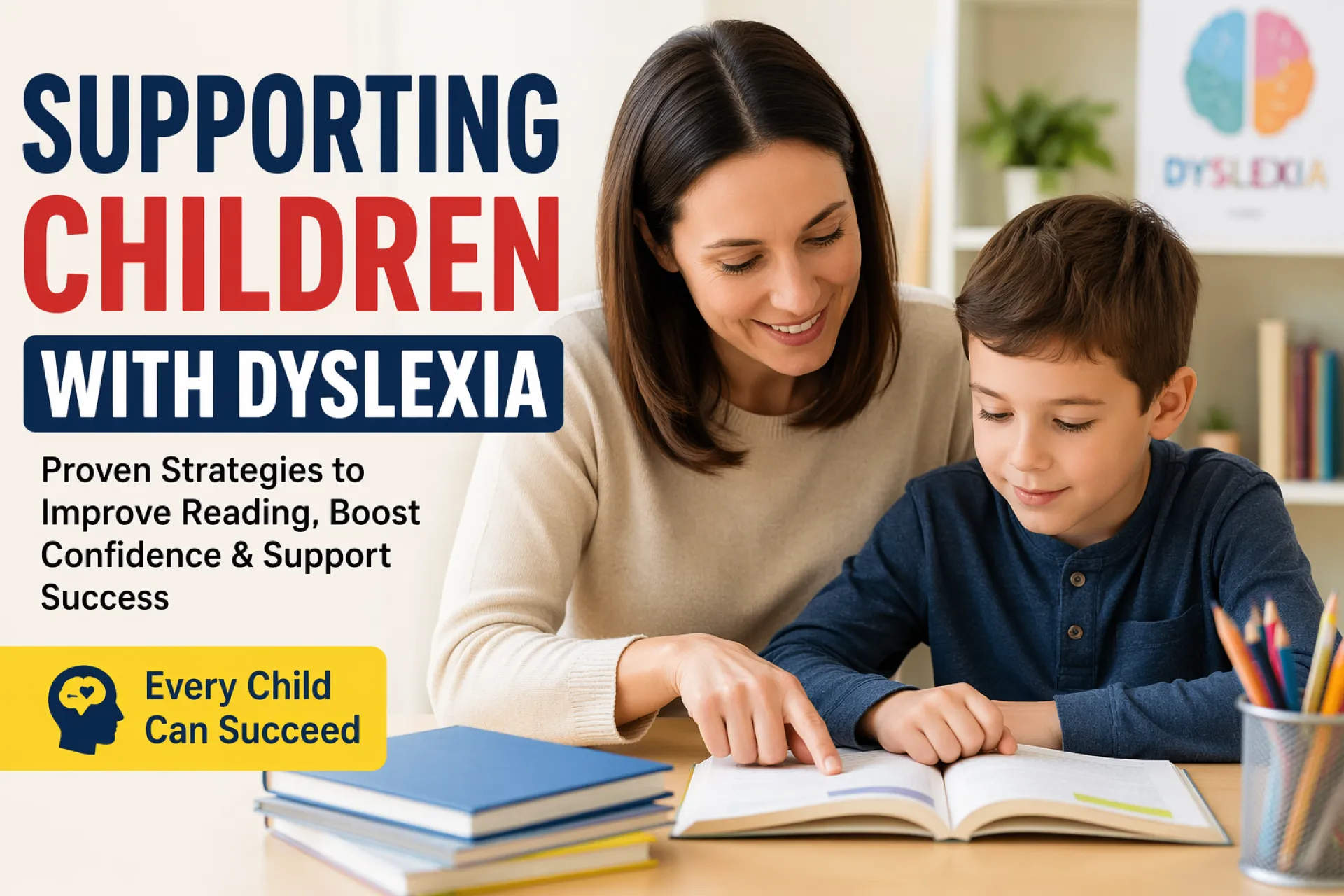
Dyslexia is a learning difference that affects reading, writing, and spelling skills. It is neurological in origin and often runs in families.
Children with dyslexia may struggle with:
- Recognizing words quickly
- Phonological processing (linking sounds to letters)
- Spelling and writing fluency
- Reading comprehension (due to decoding challenges)
However, dyslexia does not affect intelligence. Many successful individuals,including entrepreneurs, scientists, and artists,have dyslexia.
Why Early Support Matters
Early identification and intervention are crucial when supporting children with dyslexia. Research shows that children who receive structured support in early years are far more likely to:
- Develop strong reading skills
- Build confidence
- Avoid academic frustration
- Improve long-term outcomes
In countries like the US and UK, early screening programs are now encouraged in schools. Parents should also watch for early signs at home.
Signs of Dyslexia in Children
Recognizing the signs early can make a significant difference.
Preschool Age
- Difficulty learning nursery rhymes
- Trouble recognizing letters
- Delayed speech development
Elementary School
- Difficulty reading aloud
- Confusing similar letters (b/d, p/q)
- Poor spelling skills
- Avoidance of reading tasks
Older Children
- Slow reading speed
- Trouble summarizing texts
- Difficulty organizing written work
If you notice these signs, consult an educational specialist or psychologist for assessment.
Evidence-Based Strategies for Supporting Children With Dyslexia
1. Use Structured Literacy Approaches
Structured literacy is considered the gold standard in dyslexia support across the US, UK, and Canada.
It focuses on:
- Phonics (letter-sound relationships)
- Decoding skills
- Systematic and explicit instruction
Programs like Orton-Gillingham-based methods are widely recommended.
Tip: Look for tutors or schools trained in structured literacy.
2. Create a Dyslexia-Friendly Learning Environment
A supportive environment reduces stress and improves learning outcomes.
At home or school:
- Use clear fonts and larger text sizes
- Provide audiobooks
- Reduce distractions
- Allow extra time for tasks
Simple changes can make a big difference in a child’s confidence.
3. Encourage Multisensory Learning
Children with dyslexia learn best when multiple senses are engaged.
Try activities like:
- Writing letters in sand
- Using magnetic letters
- Saying sounds out loud while writing
- Tracing words with fingers
This approach strengthens neural connections and improves retention.
4. Build Strong Emotional Support
Supporting children with dyslexia isn’t just about academics,it’s also about emotional well-being.
Children may feel:
- Frustrated
- Embarrassed
- Less capable than peers
As a parent or educator:
- Celebrate effort, not just results
- Avoid comparisons
- Encourage strengths (art, sports, creativity)
- Use positive reinforcement
A confident child learns better.
5. Use Assistive Technology
Technology can be a game-changer in supporting children with dyslexia.
Helpful tools include:
- Text-to-speech apps
- Speech-to-text software
- Audiobooks (e.g., Audible, Learning Ally)
- Spell-check and grammar tools
In first-tier countries, schools often provide accommodations using these tools.
6. Provide Individualized Learning Plans
Every child with dyslexia is different. A personalized approach works best.
In the US, this may include:
- IEP (Individualized Education Program)
- 504 Plans
In the UK:
- SEN (Special Educational Needs) support
Work closely with teachers and specialists to create a plan tailored to the child’s needs.
7. Encourage Reading,Without Pressure
Reading is essential, but forcing it can backfire.
Instead:
- Let children choose books they enjoy
- Use graphic novels or illustrated books
- Read together daily
- Use audiobooks alongside text
Make reading a positive experience,not a stressful one.
8. Strengthen Phonological Awareness
Phonological awareness is a key area of difficulty in dyslexia.
Practice activities like:
- Rhyming games
- Sound matching
- Breaking words into syllables
- Blending sounds
These foundational skills are critical for reading success.
9. Collaborate With Teachers and Specialists
Supporting children with dyslexia requires teamwork.
Communicate regularly with:
- Teachers
- Special educators
- Speech-language therapists
- Psychologists
Ask for progress updates and adjust strategies as needed.
10. Focus on Strengths and Talents
Many children with dyslexia excel in areas like:
- Art and design
- Problem-solving
- Storytelling
- Engineering thinking
Encourage these strengths to build confidence and motivation.
Common Mistakes to Avoid
When supporting children with dyslexia, avoid these common pitfalls:
- Labeling the child as “lazy” or “slow”
- Ignoring early signs
- Using only traditional teaching methods
- Overloading with homework
- Comparing with siblings or peers
Awareness and patience are key.
Supporting Dyslexic Children at Home
Parents play a vital role.
Here are practical tips:
- Set a daily reading routine (10–15 minutes)
- Use visual aids and charts
- Break tasks into smaller steps
- Be patient and supportive
- Celebrate small wins
Consistency at home reinforces school learning.
Supporting Dyslexic Students in the Classroom
Teachers can make a huge difference by:
- Giving extra time for tests
- Allowing oral responses
- Providing printed notes
- Using visual teaching aids
- Avoiding reading aloud in front of peers (unless the child is comfortable)
Inclusive classrooms improve outcomes for all students,not just those with dyslexia.
Long-Term Outlook for Children With Dyslexia
With the right support, children with dyslexia can:
- Become confident readers
- Succeed academically
- Build strong careers
- Develop unique strengths
Many successful leaders, entrepreneurs, and creatives have dyslexia.
The key is early intervention, consistent support, and belief in the child’s abilities.
When to Seek Professional Help
Seek expert support if:
- Reading struggles persist beyond early grades
- The child shows signs of frustration or low self-esteem
- School performance declines
- Teachers raise concerns
Early professional guidance can prevent long-term challenges.
Final Thoughts
Supporting children with dyslexia is not about “fixing” a problem,it’s about unlocking potential.
With structured teaching, emotional support, and the right tools, children with dyslexia can thrive in school and beyond.
Parents and educators must work together to create an environment where every child feels capable, confident, and supported.
Remember:
A child with dyslexia doesn’t need less intelligence,they need a different approach.