

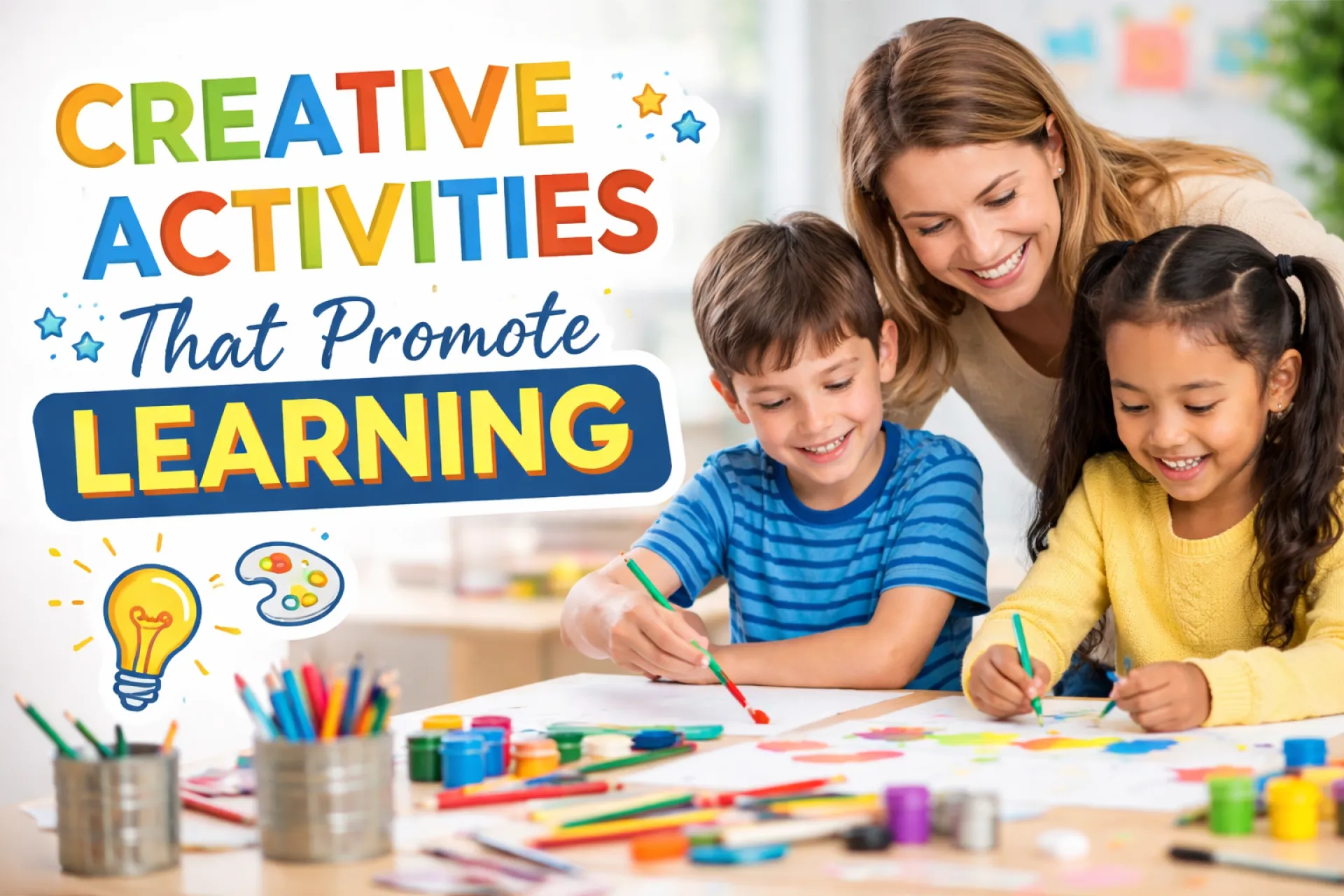
Creative learning goes beyond textbooks and memorization. It engages multiple areas of the brain, helping children:
- Improve problem-solving skills
- Boost memory and retention
- Develop emotional intelligence
- Enhance communication skills
- Build confidence and independence
Studies in child psychology show that children learn best when they are actively involved. Passive learning (like just listening) is far less effective than hands-on, creative engagement.
How Creative Activities Promote Learning
Creative activities stimulate both the left brain (logic) and right brain (imagination). This balanced stimulation helps children:
1. Strengthen Neural Connections
When children draw, build, or create, their brains form stronger neural pathways.
2. Improve Focus and Attention
Creative tasks require sustained attention, which improves concentration over time.
3. Encourage Curiosity
Children naturally ask more questions when they explore creatively.
4. Develop Real-World Skills
Creative learning teaches problem-solving, collaboration, and adaptability.
Top Creative Activities That Promote Learning
1. Art and Craft Activities
Art is one of the most powerful tools for learning.
Examples:
- Drawing and painting
- DIY crafts
- Clay modeling
- Collage making
Benefits:
- Improves fine motor skills
- Enhances creativity and imagination
- Encourages self-expression
Tip: Let children create freely instead of focusing on perfection.
2. Storytelling and Creative Writing
Storytelling is a highly effective learning method.
Activities:
- Writing short stories
- Creating comic strips
- Role-playing characters
- Oral storytelling
Benefits:
- Improves language and vocabulary
- Boosts imagination
- Develops emotional understanding
Pro Tip: Ask open-ended questions like “What happens next?”
3. Educational Games and Puzzles
Games make learning fun and interactive.
Examples:
- Board games
- Word puzzles
- Memory games
- Logic challenges
Benefits:
- Enhances problem-solving skills
- Improves memory
- Encourages strategic thinking
4. Music and Movement Activities
Music stimulates brain development like few other activities.
Activities:
- Singing songs
- Dancing
- Playing instruments
- Rhythm games
Benefits:
- Improves memory and coordination
- Enhances emotional expression
- Boosts auditory skills
5. Science Experiments at Home
Hands-on science activities spark curiosity.
Examples:
- Simple chemical reactions
- Plant growth experiments
- Water and gravity experiments
Benefits:
- Develops critical thinking
- Encourages curiosity
- Builds analytical skills
Safety Tip: Always supervise experiments.
6. Building and Construction Play
Construction activities promote logical thinking.
Examples:
- Building blocks
- LEGO projects
- DIY structures
Benefits:
- Improves spatial awareness
- Enhances problem-solving
- Encourages creativity
7. Outdoor Learning Activities
Nature is a powerful classroom.
Activities:
- Nature walks
- Gardening
- Scavenger hunts
Benefits:
- Reduces stress
- Improves physical health
- Encourages exploration
8. Role Play and Dramatic Play
Pretend play helps children understand the world.
Examples:
- Playing “teacher” or “doctor”
- Acting out stories
- Creating imaginary scenarios
Benefits:
- Builds social skills
- Enhances empathy
- Improves communication
9. Cooking and Baking Activities
Cooking is both fun and educational.
Learning Areas:
- Math (measuring ingredients)
- Science (chemical changes)
- Life skills
Benefits:
- Encourages independence
- Builds responsibility
- Improves motor skills
10. Digital Creative Learning Tools
When used correctly, technology can enhance learning.
Examples:
- Educational apps
- Digital drawing tools
- Coding games
Benefits:
- Builds tech skills
- Enhances engagement
- Supports personalized learning
Age-Wise Creative Activities
Toddlers (2–4 years)
- Sensory play
- Finger painting
- Simple puzzles
Preschoolers (4–6 years)
- Storytelling
- Role play
- Basic crafts
School-Age Children (6–12 years)
- Science experiments
- Creative writing
- Building projects
Teens (13+ years)
- Advanced art projects
- Coding
- Debate and creative thinking exercises
How Parents Can Encourage Creative Learning
1. Create a Safe Environment
Let children explore without fear of failure.
2. Limit Screen Time
Encourage hands-on activities instead.
3. Provide Open-Ended Materials
Use items like paper, blocks, and art supplies.
4. Ask Questions
Encourage thinking with questions like:
- “Why do you think this happened?”
- “What would you do differently?”
5. Be Involved
Participate in activities with your child.
Common Mistakes to Avoid
❌ Over-Structuring Activities
Children need freedom to explore.
❌ Focusing Only on Results
The process matters more than the outcome.
❌ Comparing Children
Every child learns differently.
Scientific Evidence Behind Creative Learning
Research in child development confirms that creative activities:
- Improve brain plasticity
- Enhance memory retention
- Increase engagement in learning
Children who engage in creative learning tend to perform better academically and socially.
Benefits of Creative Activities That Promote Learning
Cognitive Benefits
- Better memory
- Improved focus
- Stronger problem-solving skills
Emotional Benefits
- Increased confidence
- Better emotional regulation
Social Benefits
- Improved communication
- Enhanced teamwork
Why Creative Learning is Essential in Modern Education
With automation and AI shaping the future, creativity is becoming one of the most valuable skills.
Children who develop creativity early are more likely to:
- Adapt to change
- Think critically
- Innovate solutions
Final Thoughts
Creative learning is not just an option,it’s a necessity. By incorporating creative activities that promote learning into daily routines, parents and educators can help children develop essential life skills.
The goal is simple:
Make learning enjoyable, meaningful, and engaging.
When children learn through creativity, they don’t just gain knowledge,they develop a lifelong love for learning.