

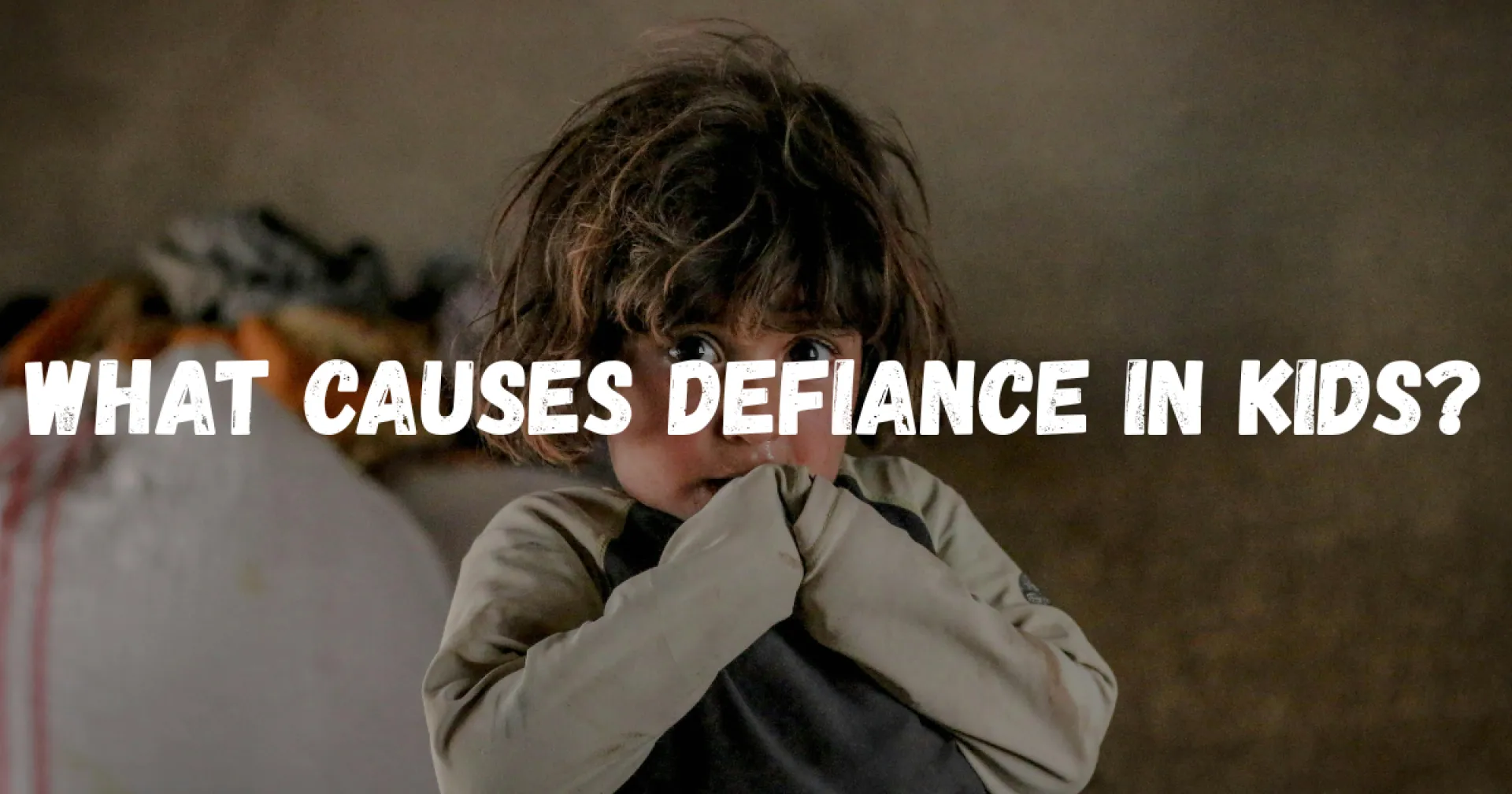
Before answering What Causes Defiance in Kids?, let’s define defiance.
Defiance typically includes:
-
Refusing to follow instructions
-
Arguing with adults
-
Saying “no” repeatedly
-
Ignoring rules
-
Deliberately doing the opposite of what’s asked
But here’s the key: defiance is often a signal, not the root problem.
Behavior is communication.
Children don’t wake up planning to be difficult. They respond to internal and external stressors in the only ways their developing brains allow.
What Causes Defiance in Kids? 10 Common Reasons
Let’s break down the most evidence-supported causes.
1. Normal Developmental Independence
One of the most common answers to What Causes Defiance in Kids? is simple: development.
Toddlers (Ages 2–3)
This is the “No!” stage. Toddlers are learning autonomy. Their brains are wired to test boundaries.
Preschoolers
They experiment with power and independence.
Teenagers
They challenge authority as part of identity formation.
Defiance during these stages is often a healthy sign of growing independence.
2. Immature Brain Development
The prefrontal cortex—the brain region responsible for impulse control and reasoning—doesn’t fully develop until the mid-20s.
Young children operate more from the emotional brain (amygdala) than the rational brain.
This means:
-
Impulses override logic
-
Big emotions override instructions
-
Frustration leads to pushback
Understanding brain science changes how we interpret behavior.
3. Inconsistent Rules or Boundaries
Children thrive on predictability.
If rules change frequently or consequences are inconsistent, children test limits more often.
Example:
-
One day screen time ends at 7 PM.
-
The next day it’s negotiable.
-
Sometimes yelling works.
Inconsistency fuels defiance because children are trying to understand where limits actually exist.
4. Need for Autonomy and Control
When children feel powerless, defiance can become their way of regaining control.
Common triggers:
-
Overly strict parenting
-
Excessive micromanagement
-
Lack of choice
Children are more cooperative when given appropriate autonomy.
5. Attention-Seeking Behavior
Even negative attention is still attention.
If a child receives more engagement during misbehavior than during cooperation, defiance can increase.
Children crave connection.
Sometimes “acting out” is a strategy to get it.
6. Emotional Dysregulation
Many defiant behaviors stem from emotional overwhelm.
Triggers include:
-
Hunger
-
Fatigue
-
Sensory overload
-
Stress at school
-
Social conflict
When children lack emotional regulation skills, defiance may be the outward expression of internal chaos.
7. ADHD (Attention-Deficit/Hyperactivity Disorder)
Another key answer to What Causes Defiance in Kids? is neurodevelopmental conditions.
Children with ADHD may appear defiant, but often:
-
They forget instructions
-
They act impulsively
-
They struggle with executive functioning
The Centers for Disease Control and Prevention reports millions of U.S. children have been diagnosed with ADHD.
What looks like defiance may actually be difficulty with attention and impulse control.
8. Anxiety or Fear
Anxious children sometimes refuse tasks that feel overwhelming.
Examples:
-
School refusal
-
Avoiding homework
-
Meltdowns before social events
What appears as defiance may be avoidance driven by anxiety.
9. Trauma or Major Life Changes
Divorce, relocation, bullying, illness, or family stress can increase defiant behavior.
Children often lack the vocabulary to express stress, so behavior becomes their language.
10. Oppositional Defiant Disorder (ODD)
When defiance is:
-
Persistent (6+ months)
-
Occurring across settings
-
Accompanied by hostility or vindictiveness
A professional may evaluate for Oppositional Defiant Disorder.
Diagnosis requires comprehensive assessment not just frequent arguing.
What Causes Defiance in Kids at School?
School environments introduce additional stressors:
-
Academic pressure
-
Peer conflict
-
Learning disabilities
-
Structured expectations
If teachers report behavior issues, consider:
-
Is your child struggling academically?
-
Is bullying involved?
-
Are expectations developmentally appropriate?
Collaboration with educators is crucial.
When Is Defiance Normal?
Defiance is usually normal when:
-
It’s occasional
-
It aligns with developmental stage
-
It improves with structure
-
It does not impair relationships or academics
Power struggles during transitions (bedtime, homework) are common.
When Should Parents Worry?
You may need professional guidance if:
-
Defiance is daily and intense
-
There is aggression or property destruction
-
Behavior lasts longer than 6 months
-
School functioning declines
-
Siblings feel unsafe
Trust your instincts. If you feel overwhelmed, support is appropriate.
The American Academy of Pediatrics encourages early screening for behavioral concerns.
The Role of Parenting Style
Parenting style influences behavior but it’s not about blame.
Authoritarian (strict, low warmth)
May increase rebellion.
Permissive (high warmth, low structure)
May increase boundary testing.
Authoritative (warm + structured)
Research shows this style produces the best behavioral outcomes.
Balance firmness with empathy.
What Causes Defiance in Kids During Screen Time?
Digital conflicts are a modern trigger.
Excessive screen use can:
-
Reduce emotional regulation
-
Increase irritability
-
Disrupt sleep
-
Increase conflict over limits
Set clear, predictable digital boundaries.
Practical Strategies to Reduce Defiance
Now that we understand What Causes Defiance in Kids?, here’s what helps.
1. Strengthen Connection First
Children cooperate more when they feel connected.
-
10–15 minutes of one-on-one time daily
-
Eye contact during instructions
-
Physical affection (when appropriate)
Connection reduces resistance.
2. Offer Limited Choices
Instead of:
“Do your homework now.”
Try:
“Would you like to start with math or reading?”
Autonomy reduces pushback.
3. Stay Calm and Consistent
Yelling escalates defiance.
Calm repetition and follow-through are more effective long-term.
4. Use Logical Consequences
Consequences should be:
-
Related
-
Respectful
-
Reasonable
If a child refuses to clean up toys:
Toys are unavailable temporarily.
5. Improve Emotional Coaching
Teach children to label feelings:
-
“You seem frustrated.”
-
“Are you feeling overwhelmed?”
Emotional literacy reduces oppositional reactions.
6. Improve Sleep Hygiene
Many defiant behaviors improve with:
-
Consistent bedtime
-
Reduced evening screen exposure
-
Adequate rest
Sleep deprivation increases irritability.
7. Collaborate on Problem-Solving
Ask:
“What makes homework hard for you?”
“How can we make mornings easier?”
Children cooperate more when involved in solutions.
What Causes Defiance in Kids and Mental Health Links
Persistent defiance may relate to:
-
ADHD
-
Anxiety
-
Depression
-
Learning disabilities
-
Sensory processing differences
A pediatrician can help determine if further evaluation is needed.
How Therapy Can Help
If defiance interferes with daily life, therapy options may include:
-
Cognitive Behavioral Therapy (CBT)
-
Parent Management Training
-
Family therapy
Early support often prevents long-term challenges.
Supporting Yourself as a Parent
Chronic power struggles lead to burnout.
Consider:
-
Parenting classes
-
Support groups
-
Counseling for stress management
Parental well-being directly impacts child behavior.
FAQs: What Causes Defiance in Kids?
Is defiance always a sign of disrespect?
No. Often it’s developmental, emotional, or stress-related.
Will my child outgrow defiance?
Many children do, especially with consistent parenting and support.
Is medication required?
Not typically for defiance alone. Treatment depends on underlying causes.
Long-Term Outlook
With:
-
Structure
-
Empathy
-
Consistency
-
Early intervention (when needed)
Most children improve significantly.
Defiance is not destiny.
Final Thoughts: What Causes Defiance in Kids?
Defiance is rarely about “bad behavior.”
It’s often about:
-
Brain development
-
Emotional overwhelm
-
Need for autonomy
-
Inconsistent boundaries
-
Underlying stress
Understanding What Causes Defiance in Kids? empowers parents to respond with wisdom instead of frustration.
If concerns persist, reach out to a pediatrician or child psychologist. Seeking support is a sign of strength not failure.
Parenting is hard. But with knowledge, patience, and the right tools, cooperation can grow.